Swedish Massage: Benefits, Techniques and Expectations
Anna Lewis
Jul 08, 2026 • 5 min read
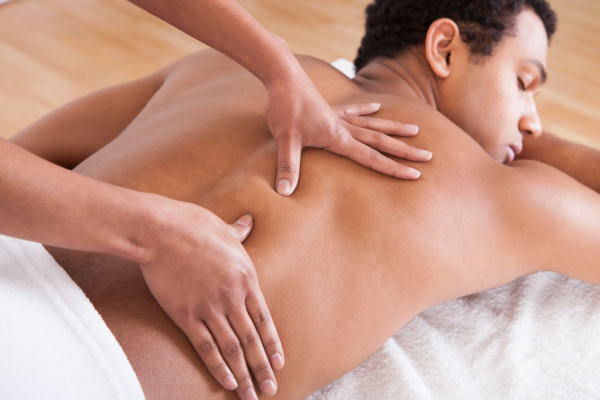
Nobody books their first Swedish massage because they understood what it was. They book it because it is first on the list, because a friend recommended it, or because it sounds like the least intimidating option. For a treatment that consistently tops global demand, Swedish massage is remarkably poorly understood, even by the people who have had one.
That gap matters. Because what you expect shapes what you notice, and what you notice shapes whether you come back.
Where the Name Actually Comes From
The word "Swedish" is a misnomer, and knowing that tells you something important about the treatment. The five strokes that define it were standardised not by a Swede but by a Dutch physician named Johann Georg Mezger, working in Amsterdam in the second half of the nineteenth century. He borrowed the French vocabulary still used today: effleurage, petrissage, friction, tapotement, vibration.
The confusion with Sweden stems partly from the work of Per Henrik Ling, a physical educator and gymnastics instructor who developed a system of movement-based therapy in Stockholm around the same time. Ling's system influenced how manual therapy spread across Europe, but the massage strokes themselves are Mezger's. In most of continental Europe, the treatment is simply called classical massage. Swedish is an English-speaking convention.
Why does this matter? Because the French names are descriptive. They tell you exactly what the technique is doing. Understanding them changes a session from something that happens to you into something you can participate in.
The Five Techniques, and What Each One Is Actually For
Effleurage opens and closes every section of the body. Long, gliding strokes moving toward the heart, applied with the whole palm. The pace is slow. The purpose is to warm the tissue, encourage venous return, and give the therapist a first reading of the body: where resistance sits, where the muscle is dense or guarded, where the breath is held. A good effleurage is not filler. It is the reconnaissance before the work begins.
Petrissage is kneading: the therapist lifts, compresses, and rolls the muscle tissue rhythmically. This is where most of the therapeutic load sits in a Swedish session. Done correctly, it works the superficial and intermediate layers of muscle, releasing the kind of accumulated tension that builds over a working week and rarely resolves on its own. Circulation to compressed tissue improves. Flexibility returns. The time spent in petrissage is usually the longest of any stroke.
Friction involves concentrated pressure applied across or along the grain of the muscle fibres. Thumbs, fingertips, or the heel of the hand. It targets adhesions: the dense, fibrous areas that accumulate around old strain, repetitive movement, or prolonged static posture. Friction applied well softens areas that feel almost cartilaginous under the hands and restores a quality of elasticity to the tissue.
Tapotement is the rhythmic percussion that most people have seen in film: hacking, cupping, pummelling. In practice it is used selectively, not continuously. It stimulates, invigorates, increases local blood flow. A competent therapist introduces it to areas that need waking up, not as background noise throughout a session.
Vibration is the subtlest stroke, often imperceptible as a distinct technique during the session. Fine oscillation transmitted through the hands, applied to specific areas to calm the nervous system and release localised tension. It works partly through the sensory system rather than mechanically, influencing how the muscle perceives and responds to touch.
What the Research Shows
A comprehensive review published in the International Journal of Neuroscience, covering multiple clinical populations and conditions, found that massage therapy produced average cortisol decreases of 31% alongside average increases of 28% in serotonin and 31% in dopamine across the studies reviewed. These are not marginal effects and they help explain what most clients report: not just feeling physically looser, but measurably different in mood and mental state.
More recently, a 2024 study published via the National Institutes of Health examined circulating inflammatory markers following a single 45-minute Swedish session and found a significant increase in interleukin-6, suggesting activation of anti-inflammatory pathways even after one treatment. For people managing the low-grade chronic inflammation that accumulates through disrupted sleep, sustained stress, or sedentary work patterns, this is meaningful.
The mechanism behind the shift most clients recognise (the sense of sinking into the table, of breathing slowing without effort) is the activation of the parasympathetic nervous system. Heart rate drops. Muscle guarding releases. The system that has been running at sustained alert through a working week finally receives a clear signal to stand down.
What a Session in London Actually Involves
A session starts with a brief conversation. Your therapist wants to know where tension is sitting, whether there are areas to work around, what you are hoping to achieve. This exchange is not a formality. It directly shapes the session.
You will be covered throughout with only the area being worked on exposed. Most sessions run sixty to ninety minutes. At sixty minutes, the work is usually focused; at ninety, there is time to cover the full body without rushing any area. Most therapists across London offer both, and it is worth considering what you actually want before defaulting to the shorter option.
Pressure in Swedish massage is lighter than deep tissue work, but lighter does not mean superficial. The strokes operate on the layers where most of your daily tension accumulates. For deeply embedded chronic pain or structural issues, deep tissue or trigger point work will serve you better, and a good therapist will say so.
After the session: expect physical looseness combined with a quality of relaxation and mental quiet that is difficult to anticipate before you have experienced it. Most clients sleep well that night, sometimes unusually so.
Why the Therapist Changes Everything
Swedish massage is where the gap between a capable and an exceptional therapist becomes most visible. The techniques are standardised. The reading of the body underneath them is not.
A therapist who applies the five strokes by rote delivers something predictable. A therapist who uses effleurage to gather information, who adjusts the depth of petrissage in real time based on what the tissue is doing, who knows when friction is appropriate and when it would be counterproductive: that therapist delivers something else entirely.
The treatment is identical on paper. The result is not.
At Elite Massage UK, therapists are individually selected rather than listed. Swedish massage is often the first lens through which a therapist's skill is assessed, because it is where the quality of attention is most clearly felt. The professionals available through the agency work across Mayfair, Kensington, Chelsea, Marylebone, and Greater London, or at home.
For Swedish massage explore the Swedish massage treatment page for more detail on what is available and how to book.


